Geheimen en vriendschap in de duivensport: een tijdsbeeld
Inhoudelijk bijgewerkt op september 19, 2026 · Redactie Duivenhouden.com · 5 min. leestijd
Redactionele toelichting: Dit is een persoonlijke en historische beschouwing over kennisdeling en vriendschap in de duivensport. Ervaringen en verhoudingen horen bij de beschreven periode en zijn geen algemeen oordeel over liefhebbers of organisaties.
Vroeger was het lastiger om met duiven te starten dan tegenwoordig. Je was afhankelijk van de liefhebbers in je omgeving.
Getting started was a great deal more difficult in olden times than it is today. In the 1930’s, a budding fancier knew about other people’s birds from seeing them fly rather than from observing them in the loft. Even between experienced breeders, friendship took place only sporadically. Precious secrets, such as the raising of babies, the characteristics of breeding pairs, the occasional outcrosses, were zealously kept. Of all that lore, the facts concerning the preparation of male birds for the suelta sport deserved the sternest form of concealment.
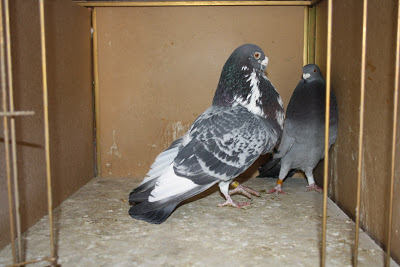
A suelta is a team of Spanish Thief Pouter cocks kept single in order to attract strange hens to one’s own loft. The game can be considered the epitome of the pigeon fancy in Spain and the touchstone of a fancier’s and his birds’ capabilities. It serves to judge fully the birds and their owner as well. Fifty years ago, it was normal to see the fanciers on streets and squares, admiring the male birds at work, commenting on the beauty and “intention” of their flight. There would also be talk about the animals’ ancestry, training, general condition, and about the number and breed of birds that composed each suelta. The celebrated Valencianos were the breed most commonly used both of big and small size. In the entire city of Linares, in the province of Jaen, only one exceptional fancier kept Marcheneros as well as Cola-vueltas, which flew with their tails turned upwards. His pigeons, well cared for and selected for the utmost qualities, were certainly worth watching.
As we said before, each fancier carefully concealed from the others the reasons behind his success although eventually all knowledgeable breeders reached practically the same conclusions. Obviously, there are several factors that combine to make a suelta successful, the most important of them being the type of loft one has, the number of cocks one maintains in the suelta and, indeed, the birds themselves.
If the loft is in a low place, the birds should be of the smaller type and very aggressive whereas they can be bigger and heavier if the loft is placed on a high terrace, roof top or similar location. The number of birds depends on the space available since each one needs to be undisturbed, claiming a territory of its own. Each must have its own nest box, comfortable enough, dry and free from draughts, always maintained in the same place. There, water and feed can be individually allotted, which is an excellent practice.
A sueltamay be perfect, as far as number is concerned, even when formed by as little as a two bird team, and it may have as many as seven. However, the more birds there are in the suelta, the more complicated it becomes. Perhaps three cocks alone make up the best possible team: one does not need to breed too many reserve birds; space and cleaning-time requirements are minimal; feed bills are reduced. Also, neighbours are not likely to complain too much about only three loose pigeons.
The best cocks for the suelta are those born in March or April (Northern Hemisphere). Spring birds are usually hale and strong; they enjoy a long period of preparation and besides, undergo their moult within the year they are born. Top feather condition, as one can easily imagine, is essential to the sport.
The colour of the birds may vary. It is advisable, nevertheless, that they be of the colour which best identifies their particular breed, and it is customary for all the birds in one suelta to have the same colour. In general, blue or dark coloured birds seem to keep their plumage in better condition than birds of other colours. We also like all of our birds to be of a similar type and size. That makes the suelta “look good”, and probably all specimens will show similar qualities. Age is important too. An old bird tends to “break” the suelta, becoming a hindrance for the younger ones, especially in flight. For that reason, an adequate renovation of the team is always convenient.
An excellent training practice consists of flying the young pouter birds together with young racing homers so that they develop their wings at a maximum and acquire self-confidence in flight. Once the pouter males start selecting hens, however, the homer cocks should be withdrawn. Then the young pairs choose their nesting boxes and, upon laying their first eggs, are allowed to sit on them for about ten days. After that, the hens are cooped in where their mates cannot see or hear them. By September, the cocks are alone, separated from breeders, single hens, and youngsters, and will gradually reach their top condition. By December, they will delight the fancier with their beauty and performance.
It is not a good system to let a single hen fly with the suelta every now and then, as some fanciers do, in order to observe the males’ work. On the other hand, it really pays off to be patient, letting the cocks reach the peak of their rut all by themselves. Thus, they will perform most attractively for a period of several months.
The suelta should be maintained from September to May. From May to August the suelta birds should be mated so as to “refresh” them. However, they must not be allowed to raise any babies. A new cycle will begin in September. The fancier will know by then if he has to retire any of last year’s suelta cocks. Ideally, he would have to take out none of them, which would mean a certain degree of success. If a bird must be discarded because of old age, after performing well for several years, one does not necessarily have to worry. As a breeder, that very same bird is a sure bet for the future.
Geschreven door: JUSTO SANCHEZ RUIZ, Linares, Jaen, Spain
Dit artikel is gecontroleerd op duidelijkheid, bruikbaarheid en verantwoorde formulering. Praktijkervaring wordt niet als wetenschappelijk bewijs gepresenteerd. Informatie over ziekte, medicijnen en behandeling is algemeen en vervangt geen onderzoek door een gespecialiseerde dierenarts.




Geef een reactie